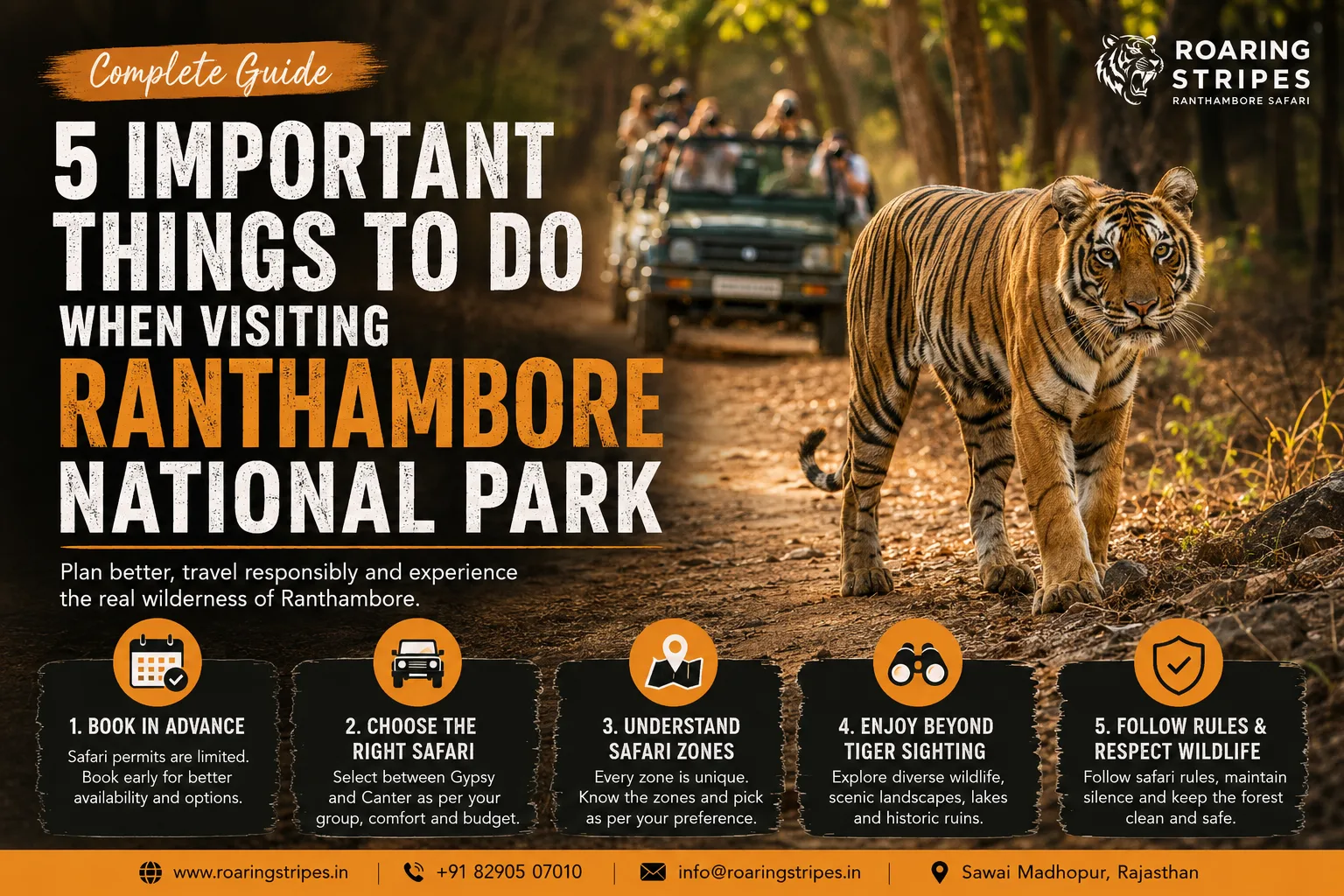
Ranthambore National Park is one of India’s most exciting wildlife destinations. Located near Sawai Madhopur in Rajasthan, it is widely known for Bengal tigers, dry deciduous forests, scenic lakes, ancient ruins and the historic Ranthambore Fort.
However, a memorable Ranthambore trip is not only about spotting a tiger. Proper safari planning, choosing the right vehicle, understanding safari zones, following forest rules and exploring the destination beyond the jungle can make your visit more enjoyable.
Whether you are visiting Ranthambore for the first time, travelling with family or planning a wildlife photography trip, here are the most important things you should do during your visit.
1. Book Your Ranthambore Safari in Advance
A jungle safari is usually the main attraction of a Ranthambore trip. Safari permits are limited for every date, shift, vehicle category and safari zone. Popular weekends, public holidays, winter dates, Christmas, New Year and the October reopening period can receive heavy demand.
Booking early can give you better availability and more flexibility while choosing your travel date, morning or afternoon shift and safari vehicle.
Before confirming your plans, visit the Ranthambore Safari Booking page to submit your preferred dates and visitor details.
Details You Should Keep Ready
- Full name of every visitor
- Age and gender
- Valid government-issued photo ID
- Passport details for foreign visitors
- Preferred safari date
- Morning or afternoon shift preference
- Gypsy or Canter preference
- Hotel or pickup location in Sawai Madhopur
Visitors planning an October to December trip should also read our detailed Ranthambore Advance Safari Booking 2026 guide.
2. Choose the Right Safari Vehicle
Ranthambore offers two main safari vehicle options: Gypsy and Canter. Both vehicles operate on authorised forest routes, but they provide different experiences.
Gypsy Safari
A Gypsy is a smaller open safari vehicle generally preferred by couples, families, private groups and wildlife photographers. Its smaller size, limited seating and open design provide a more personal safari experience.
A Gypsy is usually suitable for:
- Families with children
- Couples
- Small private groups
- Wildlife photographers
- Visitors wanting greater comfort
Learn more about vehicle capacity, booking and planning on the Ranthambore Gypsy Safari page.
Canter Safari
A Canter is a larger shared open safari vehicle. It is suitable for solo travellers, larger groups and visitors looking for a comparatively economical safari option.
A Canter is usually suitable for:
- Solo travellers
- Budget-conscious visitors
- Large families and groups
- School or corporate groups
- Visitors comfortable with shared seating
Check complete details on the Ranthambore Canter Safari page.
For a detailed vehicle comparison, read Gypsy vs Canter Safari in Ranthambore.
3. Understand Ranthambore Safari Zones
Ranthambore Tiger Reserve is divided into multiple safari zones. Each zone has its own terrain, forest routes, entry gates, water bodies, vegetation and wildlife movement patterns.
Some zones are known for lakes and historic ruins, while others contain rocky hills, valleys, grasslands, dry forests and seasonal water sources. A zone may perform well during one period and become quieter during another because wild animals move naturally.
Before requesting a zone, explore the complete Ranthambore Safari Zones guide.
Important Things to Know About Zone Selection
- No safari zone can guarantee a tiger sighting.
- Tiger movement can change daily.
- Old sighting reports may not represent current activity.
- Water availability can affect wildlife movement.
- Every zone offers a different forest landscape.
- Flexible visitors generally get more booking options.
You can also compare all zones in our complete zone-wise tiger sighting guide.
4. Do Not Visit Ranthambore Only for a Tiger Sighting
Seeing a wild tiger is an unforgettable experience, but it should not be the only measure of a successful safari. Ranthambore is a complete natural ecosystem containing predators, herbivores, reptiles, birds, forests, lakes and historic structures.
During a safari, visitors may also encounter:
- Leopards
- Sloth bears
- Striped hyenas
- Golden jackals
- Sambar deer
- Spotted deer or chital
- Nilgai
- Wild boar
- Hanuman langurs
- Marsh crocodiles
- Peacocks
- Birds of prey and water birds
Animal tracks, alarm calls, bird activity, ancient ruins and changing forest landscapes can make the safari rewarding even when a tiger remains hidden.
Recent movement reports can be explored on the Ranthambore Tiger Sightings page. These reports can provide useful context, but they should never be treated as a guarantee.
5. Respect Wildlife and Follow Safari Rules
Ranthambore is a protected wildlife habitat, not a zoo. Visitors enter the natural home of tigers and other animals, so responsible behaviour is essential.
Important Safari Rules
- Remain seated inside the safari vehicle.
- Follow the instructions of your guide and driver.
- Do not shout or play loud music.
- Never feed or attempt to touch wildlife.
- Do not throw plastic, food packets or other waste.
- Maintain a safe distance from animals.
- Do not pressure the driver to chase an animal.
- Do not block an animal’s movement.
- Avoid sudden movements during close sightings.
- Follow all photography and camera regulations.
Responsible tourism protects wildlife and creates a safer experience for tourists, guides, drivers and animals.
For general questions regarding permits, documents, safari timing and visitor rules, check the Ranthambore Safari FAQ page.
6. Check the Latest Mobile Phone and Camera Rules
Photography rules inside protected safari areas may change. Visitors should confirm the latest regulations before entering the park rather than depending on old travel videos or social media posts.
If mobile phone usage is restricted during your visit, keep your phone safely stored and follow instructions given at the reporting point. Visitors carrying professional cameras should also confirm applicable charges and permissions.
Read our latest guide on the Ranthambore Safari Mobile Phone Ban 2026 before travelling.
Wildlife Photography Tips
- Charge all camera batteries before leaving the hotel.
- Carry enough memory card storage.
- Use a dust cover during dry and windy conditions.
- Keep your camera ready before entering the forest.
- Avoid standing or leaning dangerously outside the vehicle.
- Do not use flash close to wildlife.
- Respect other visitors during a sighting.
Photography is an important part of the experience, but spend some time observing the forest without continuously looking through a screen.
7. Select the Best Time for Your Visit
The Ranthambore experience changes considerably throughout the safari season. Weather, vegetation, water availability, tourist demand and wildlife visibility vary from month to month.
October to November
The forest usually appears greener after the monsoon. These months are suitable for scenic landscapes, comfortable travel and nature photography. October opening dates can be busy, so early booking is recommended.
December to February
Winter offers pleasant daytime weather, although morning safaris can be cold. These months are popular with families, international visitors, birdwatchers and photographers.
March to April
Temperatures begin to rise and vegetation gradually becomes drier. Wildlife visibility around open areas and water sources may improve.
May to June
Summer safaris can be extremely hot, but wildlife activity near remaining water sources may create valuable sighting opportunities. Visitors must prepare for intense heat and sun exposure.
For detailed seasonal advice, read the Best Time to Visit Ranthambore in 2026 month-by-month guide.
You can also check the main Best Time to Visit Ranthambore page for practical trip planning information.
8. Carry the Correct Identification Document
Visitors should carry the same original identification document that was used while booking the safari. A difference in name, document number or visitor details may create problems during entry verification.
For Indian Visitors
Indian tourists should keep a valid government-issued photo ID ready. The selected document and entered details should match the safari permit.
For Foreign Visitors
Foreign visitors should normally provide passport details during booking and carry the same original passport for verification.
Indian and international travellers can read our detailed Ranthambore Safari Booking for Indians and Foreigners guide.
9. Reach the Safari Reporting Point on Time
Safari vehicles enter the forest according to fixed shifts. Late arrival may cause delays, verification problems or missed entry.
Confirm the following details one day before your safari:
- Safari shift timing
- Reporting time
- Pickup point
- Vehicle type
- Safari zone
- Required ID proof
- Driver or coordinator contact details
Try to reach the assigned reporting point at least 20 to 30 minutes before the instructed time, especially during busy weekends and holiday periods.
10. Wear Comfortable and Season-Appropriate Clothing
Safari vehicles are open, so visitors are directly exposed to cold air, sunlight, dust and wind. Clothing should be selected according to the month and safari shift.
Recommended Winter Clothing
- Warm jacket
- Layered clothing
- Woollen cap
- Gloves for early morning safaris
- Closed and comfortable footwear
Recommended Summer Clothing
- Lightweight cotton clothing
- Cap or wide-brimmed hat
- Sunglasses
- Sunscreen
- Comfortable footwear
Neutral colours such as olive green, brown, beige and grey are generally suitable for wildlife safaris. Avoid strong perfumes, flashy accessories and uncomfortable clothing.
11. Visit the Historic Ranthambore Fort
A Ranthambore trip should not be limited to the jungle safari. Ranthambore Fort is one of the region’s most important historic attractions and offers panoramic views of the surrounding forest, hills and lakes.
The fort complex contains historic gateways, temples, ruins and viewpoints. Depending on your safari shift, you may be able to visit the fort on the same day.
Tips for Visiting Ranthambore Fort
- Wear comfortable walking shoes.
- Carry drinking water.
- Avoid carrying unnecessary luggage.
- Do not feed monkeys.
- Respect temples and religious areas.
- Allow sufficient time for the climb and exploration.
12. Check Safari Prices Before Making Payment
Ranthambore safari costs can depend on the vehicle type, visitor category, booking date, permit availability and applicable government charges.
Before confirming a booking, understand what is included in the quoted amount. Ask whether the price covers:
- Forest permit
- Safari vehicle
- Driver charges
- Nature guide charges
- Applicable taxes
- Pickup or transfer services
Check the Ranthambore Safari Price page for vehicle-wise pricing and booking information.
13. Plan Your Hotel and Transport Early
Sawai Madhopur has accommodation options ranging from budget hotels and guesthouses to wildlife resorts and luxury properties. Choose accommodation according to your budget, safari pickup arrangement, group size and railway or road travel schedule.
Visitors arriving by train should avoid keeping a very tight gap between arrival time and safari reporting time. Train delays, hotel check-in and local transfers may affect your schedule.
Explore available stay planning options on the Ranthambore Hotels and Safari Packages page.
For route and transport guidance, visit How to Reach Ranthambore.
14. Consider Booking More Than One Safari
Visitors staying in Ranthambore for two or more days should consider taking more than one safari. Every safari shift is different, and wildlife movement can change within a few hours.
Booking multiple safaris can provide:
- More time inside the forest
- Different landscapes and routes
- Morning and afternoon experiences
- Better photography opportunities
- More chances to observe animal behaviour
However, even multiple safaris cannot guarantee tiger sightings. Visitors should maintain realistic expectations and enjoy the complete wildlife experience.
15. Keep Your Safari Expectations Realistic
Wild animals do not follow tourist schedules. Tigers may rest inside dense vegetation, move away from safari tracks or remain inactive during your shift.
Guides and drivers use tracks, alarm calls, recent movements and forest knowledge to locate wildlife, but they cannot control animal behaviour.
A responsible safari operator should provide honest guidance rather than promising guaranteed sightings.
Essential Ranthambore Safari Checklist
- Original government-issued photo ID or passport
- Safari booking confirmation
- Hotel and pickup details
- Season-appropriate clothing
- Comfortable footwear
- Camera and charged batteries
- Extra memory cards
- Binoculars, if available
- Sunscreen and sunglasses
- Cap, scarf or winter jacket
- Drinking water, where permitted
- Emergency contact details
Plan Your Ranthambore Safari with Roaring Stripes
A successful Ranthambore trip requires more than simply reaching Sawai Madhopur. Safari permits, vehicle type, zones, identification documents, hotel arrangements and reporting times should all be planned carefully.
Roaring Stripes is a local Sawai Madhopur-based safari planning platform helping visitors with Ranthambore safari booking, Gypsy and Canter selection, zone guidance, pricing information and stay planning.
Submit your preferred dates through the Ranthambore Safari Booking page or contact the Roaring Stripes team for local booking assistance.
You can also explore more booking tips, seasonal updates and wildlife travel information on the Roaring Stripes Safari Blog.
FAQs
Is tiger sighting guaranteed in Ranthambore?
No. Tigers are wild animals, and sightings can never be guaranteed. Every safari offers a unique wildlife experience.
How early should I book my safari?
Booking several weeks—or even months—in advance is recommended during peak tourist season.
Morning or Evening?
Both have their advantages. Morning safaris offer cooler weather, while evening safaris provide excellent lighting for photography.
What should I carry for the safari?
Carry your ID, camera, binoculars, cap, sunscreen, water bottle, and wear comfortable neutral-coloured clothing.
Can I visit Ranthambore Fort on the same day?
Yes. Many visitors combine a safari with a visit to Ranthambore Fort, depending on their schedule.
Planning a safari trip?
If you want help picking dates, safari format, or the right zone strategy, our team can guide you before you book.