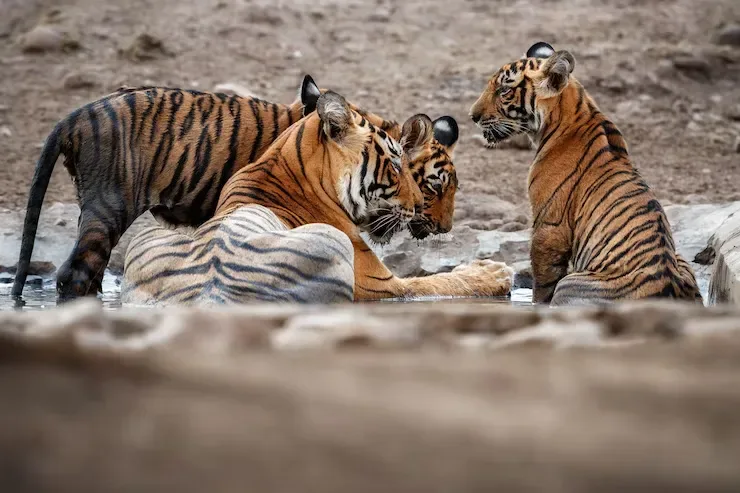
Zone Overview
A beautiful blend of dense forest, historic structures, peaceful lakes, and rich wildlife, Zone 4 is one of Ranthambore's most scenic safari routes and is highly recommended for nature lovers and wildlife photographers.
Zone 4 is one of the most picturesque safari zones inside Ranthambore National Park and is accessed through the Singh Dwar entry gate. The zone is well known for its peaceful forest atmosphere, diverse wildlife, and famous locations including Lakkarda, Adidaant, and Malik Talao. Unlike some of the busier safari routes, Zone 4 offers a perfect balance of wildlife viewing and scenic landscapes, making it popular among both first-time visitors and experienced wildlife enthusiasts. The zone consists of dense dry deciduous forest, open grasslands, rocky ridges, freshwater lakes, and ancient forest tracks that together create an excellent habitat for numerous wildlife species. The presence of Malik Talao, one of Ranthambore's well-known lakes, attracts many herbivores and birds throughout the year, which in turn supports predator movement within the ecosystem. Lakkarda is widely recognised as an important habitat for sloth bears and is one of the few locations in Ranthambore where visitors occasionally get an opportunity to observe these shy mammals in their natural environment. Although sloth bear sightings remain relatively rare, Lakkarda has earned a strong reputation among wildlife guides and photographers for this reason. Zone 4 also includes Adidaant, another ecologically important area that supports a healthy population of deer, langurs, nilgai, wild boar, and various bird species. The combination of natural water sources and dense vegetation makes this zone attractive for wildlife throughout the safari season. Besides the Royal Bengal Tiger, visitors may encounter Leopard, Sloth Bear, Sambar Deer, Chital, Nilgai, Wild Boar, Hanuman Langurs, Jackals, Marsh Crocodiles, Jungle Cats, Indian Monitor Lizards, and over a hundred species of resident and migratory birds. Wildlife movement inside Zone 4 varies naturally according to season, weather conditions, prey availability, and breeding activity. While the zone has produced numerous memorable tiger sightings over the years, no safari operator or guide can guarantee the sighting of any particular animal. Every safari remains a unique wildlife experience. For photographers, Zone 4 offers exceptional diversity. Dense forests provide dramatic light conditions, while Malik Talao creates beautiful reflections during sunrise and sunset. The combination of lakes, rocky hills, forest roads, and open meadows makes this one of the most photogenic safari zones in Ranthambore. Nature lovers appreciate Zone 4 not only for large mammals but also for its remarkable birdlife. During winter, visitors frequently observe kingfishers, painted storks, cormorants, eagles, owls, peafowl, herons, bee-eaters, and several migratory waterbirds around Malik Talao. Overall, Zone 4 is considered an excellent choice for travellers who want a peaceful safari with rich biodiversity, beautiful scenery, and the possibility of observing multiple wildlife species within a single safari drive. Discover Ranthambore Zone 4, famous for Malik Talao, Lakkarda, Adidaant, tiger habitat, sloth bears, rich birdlife, scenic forest landscapes, and unforgettable wildlife safari experiences. Zone 4 of Ranthambore National Park is entered through Singh Dwar and includes famous locations such as Lakkarda, Adidaant, and Malik Talao. The zone is recognised for its dense forests, freshwater lake ecosystem, sloth bear habitat, tiger territory, and exceptional biodiversity. Visitors may encounter Bengal Tigers, Leopards, Sloth Bears, Sambar Deer, Chital, Nilgai, Wild Boar, Langurs, Marsh Crocodiles, and a wide variety of resident and migratory birds. Zone 4 is particularly recommended for wildlife photography, birdwatching, and travellers seeking a quieter yet wildlife-rich safari experience.
Landscape
Dense Dry Deciduous Forest, Malik Talao Lake, Rocky Hills, Open Grasslands, Forest Trails, Seasonal Waterholes, Natural Wildlife Habitat
Best For